Grade 4 · Unit 2: Living things and environments
Amazing birds
Feathers, beaks and wings – birds are built for their lives.
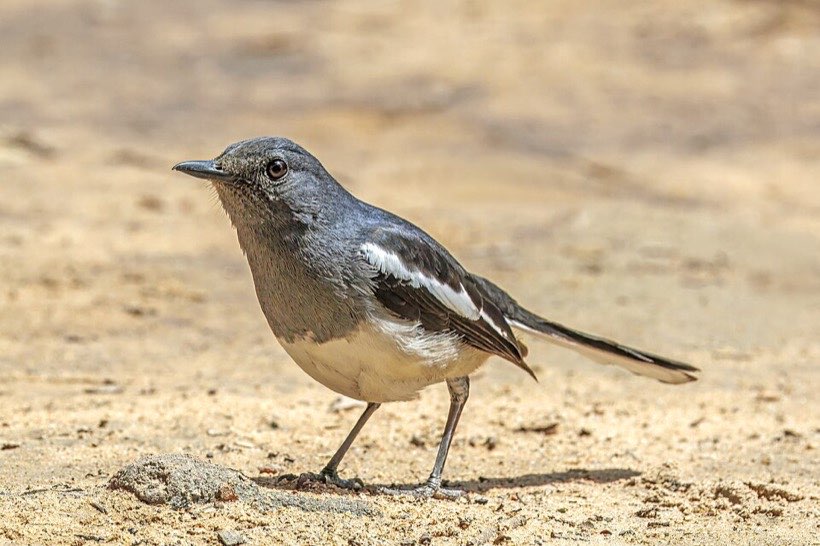
What makes a bird?
All birds have feathers, wings and a beak. They lay eggs with hard shells, and they are warm-blooded. Most birds can fly, but some, like ostriches and penguins, cannot.
The oriental magpie-robin (doyel) is the national bird of Bangladesh.
Birds are the only animals with feathers. The doyel is black and white and is famous for its sweet song in the early morning.
Beaks for different foods
A bird’s beak is adapted to the food it eats. Kingfishers have long, sharp beaks for catching fish. Parrots have strong, curved beaks for cracking nuts. Eagles have hooked beaks for tearing meat. Ducks have flat beaks for sifting food from water.
A kingfisher’s long, sharp beak is perfect for catching fish.
A woodpecker has a strong, chisel-shaped beak to drill into bark, and a sunbird has a long, thin, curved beak to reach nectar deep inside flowers.
Feathers and flight
Feathers are light but strong. Fluffy feathers close to the body keep birds warm. Long flight feathers on the wings and tail help birds to fly and steer.
Big flight feathers on the wings push against the air.
Birds keep their feathers clean and tidy by preening them with their beaks. Ducks spread oil on their feathers so water runs off.
Visitors from far away
Every winter, many birds migrate to Bangladesh from colder places in the north. They rest and feed in our haors, rivers and wetlands. In spring, they fly back thousands of kilometres to breed.
Migrating ducks rest on a wetland in winter.
Ducks, geese and waders arrive in the haors of Sylhet and Sunamganj every winter. Counting them each year tells scientists whether the wetlands are healthy.
Did you know? Some migrating birds fly over the Himalayas, the highest mountains on Earth.
Key words
- feathers
- Light coverings on a bird’s body that keep it warm and help it fly.
- beak
- The hard mouth of a bird.
- adapted
- Suited to where it lives and how it gets food.
- migrate
- Travel a long way each year to find food or a warmer place.
Activity: Beak challenge
You need: tools: tweezers, a spoon, a peg, chopsticks, foods: seeds, small pieces of pasta, water in a bowl, raisins, a timer
- Each tool is a “beak”. Predict which beak is best for each food.
- Try to pick up as much of one food as you can in 30 seconds with each beak.
- Record how many pieces you collected.
- Which beak was best for which food? Which real bird has a beak like that?
Think and talk
- Which birds have you seen near your home? What do they eat?
- Why might a bird migrate?
- How is a duck’s beak different from a crow’s beak?
What I learnt
- I can describe the features of birds.
- I can explain how beaks are adapted to different foods.