Grade 3 · Unit 5: Investigating materials
Sorting materials
Group materials using diagrams like a scientist.
Groups of materials
We can sort objects by the material they are made of. Metal, wood, plastic, glass, rock, rubber and fabric are common groups. We can also sort by properties, like hard or soft.
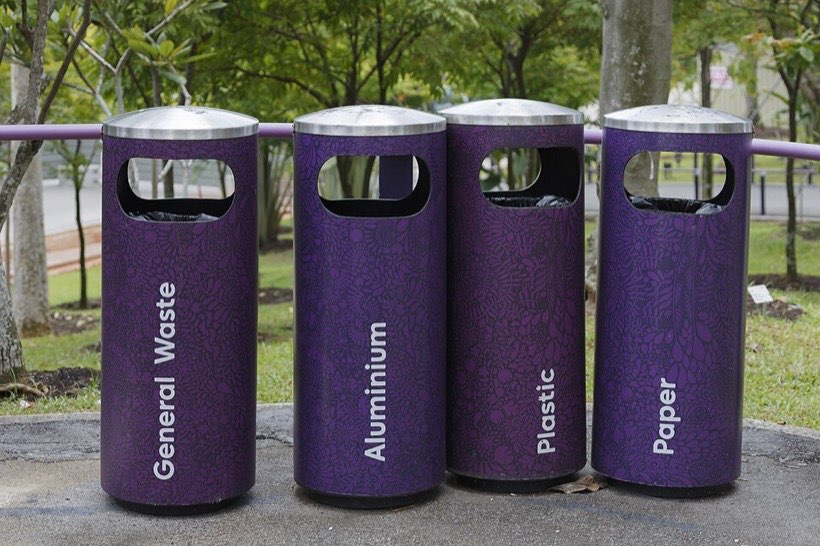
Bins for sorting rubbish into different materials: paper, plastic, aluminium and general waste.
Natural or man-made?
Natural materials come from plants, animals or the ground: wood, cotton, jute, wool and rock. Man-made materials are made by people: plastic, glass, nylon and paper. Many man-made materials are made from natural ones. Glass is made from sand.
Wool comes from sheep – it is a natural material.
Venn diagrams
A Venn diagram uses two circles that overlap. One circle could be “metal” and the other “shiny”. A shiny metal spoon goes in the middle, because it fits both criteria.
A Venn diagram for “metal” and “shiny”. Shiny metal things go in the middle.
Things that fit neither rule go outside both circles. A Venn diagram shows clearly which things share properties.
Carroll diagrams
A Carroll diagram is a grid with two rules. The columns could be “flexible” and “not flexible”. The rows could be “metal” and “not metal”. Each object goes in the box that fits both rules.
A Carroll diagram for “metal” and “flexible”.
Did you know? Carroll diagrams are named after Lewis Carroll, who wrote “Alice in Wonderland” and loved logic puzzles.
Key words
- sort
- Put things into groups.
- criteria
- The rules you use to sort things.
- Venn diagram
- Overlapping circles for sorting. Things that fit both rules go in the middle.
- Carroll diagram
- A grid for sorting things by two rules.
- natural
- Comes from nature, like wood or wool.
- man-made
- Made by people, like plastic or glass.
Activity: Sort it two ways
You need: two hoops, a large grid drawn on paper, objects: coin, rubber band, paper clip, plastic ruler, wooden spoon, foil, cotton wool, glass marble
- Make a Venn diagram with the hoops: “metal” and “flexible”.
- Sort the objects. Which go in the middle? Which go outside?
- Now make a Carroll diagram with the same two rules.
- Do the objects end up in matching groups?
- Choose your own two rules and sort again.
Think and talk
- What groups would you use to sort the objects in your pencil case?
- Where would a glass marble go in a Venn diagram of “transparent” and “hard”?
- Which is easier for you – a Venn or a Carroll diagram? Why?
What I learnt
- I can sort materials into groups.
- I can use Venn and Carroll diagrams.
- I know the difference between natural and man-made materials.