Switches
Open the gap, close the gap – off and on!
Why switches?
We do not want lights on all the time. A switch lets us turn them on and off.
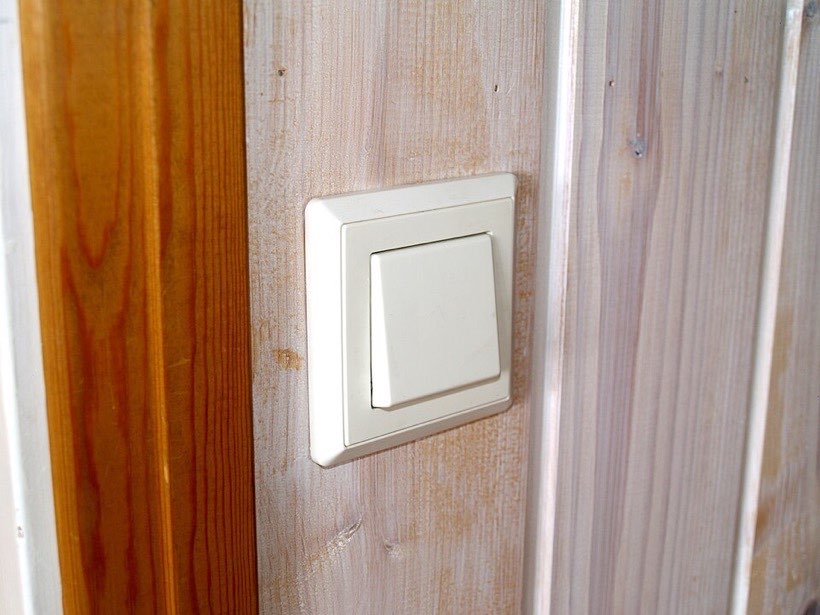
A wall switch. Press it to turn a light on or off.
Inside the switch, two pieces of metal touch to close the gap.
How a switch works
When the switch is on, it closes the gap. The loop is complete. When it is off, it opens a gap. Electricity stops.
A switch is like a drawbridge: closed lets electricity cross, open stops it.
Switches everywhere
Wall switches, torch buttons and TV remotes are switches. Some you press, some you slide, some you turn.
A torch has a switch, a battery and a bulb in a circuit.
Slide the torch switch and you close the circuit inside.
Make a switch
A paper clip and two drawing pins can make a switch. Metal is a conductor. It lets electricity flow. Plastic is an insulator. It covers wires to keep us safe.
A metal paper clip. Metals let electricity flow.
A paper clip makes a good switch because it is a conductor.
Did you know? The plastic on a wall switch is an insulator, so your finger never touches the electricity.
Key words
- switch
- A part that opens or closes a gap in a circuit.
- on
- The switch is closed – the circuit is complete.
- off
- The switch is open – there is a gap.
- conductor
- A material that lets electricity flow, like metal.
- insulator
- A material that stops electricity flowing, like plastic or wood.
Activity: Paper clip switch
You need: a cell in a holder, a bulb in a holder, 3 wires with clips, a piece of card, 2 metal drawing pins, a metal paper clip
- Push the 2 pins into the card, a little apart. Hook the paper clip round one pin.
- Join the pins into your circuit, like a bridge.
- Swing the paper clip to touch the other pin. What happens?
- Swing it away. What happens now?
- Test other materials as a bridge: plastic, wood, coin, foil. Which work?
Think and talk
- How many switches can you find in your classroom?
- Why are switches covered in plastic?
- What kind of switch would be good for a night light?
What I learnt
- I know that a switch opens and closes a gap in a circuit.
- I can make a simple switch.
- I know that metals let electricity flow.