Grade 3 · Unit 4: Myths, legends and fables
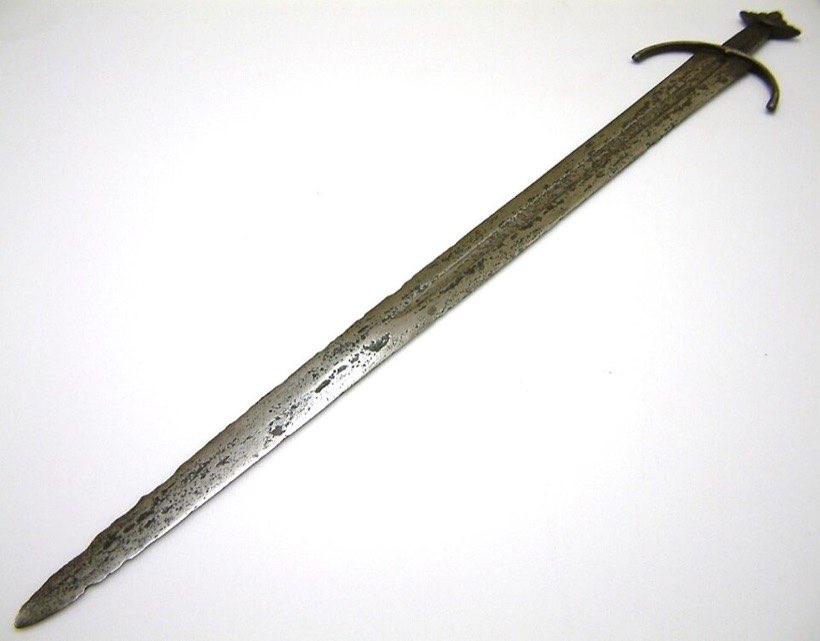
The sword in the stone
Only the true king could pull it out.
Read the legend
This legend comes from Britain. Read it and notice the words he, it and they.
The sword in the stone
a legend from Britain, retold
Long ago, Britain had no king. In a churchyard stood a great stone with a sword stuck deep inside it.
Golden words on the stone said: Whoever pulls out this sword is the true king.
Strong knights came from far and wide. They pulled and heaved, but it would not move.
A boy called Arthur was a helper to a knight named Kay. When Kay forgot his sword, Arthur ran to find one.
He saw the sword in the stone. He pulled it gently – and it slid out as easily as a spoon from honey.
The people could hardly believe it. They cheered, and the young helper became King Arthur.
Legends of King Arthur have been told in Britain for over a thousand years.
Pronouns
A pronoun takes the place of a noun. Arthur → he. The sword → it. The knights → they. Without pronouns: “Arthur saw the sword. Arthur pulled the sword.” – too much repeating!
Pronouns stop us repeating nouns.
Your turn: Replace the repeated noun: The knights pulled. The knights could not move it.
Pronouns and verbs agree
He pulls – not he pull. They were – not they was. Check that each pronoun and verb agree.
In standard English, the verb must match the pronoun.
Key words
- legend
- A story about a hero that may be partly true.
Activity: Pronoun swap
You need: a paragraph with repeated names
- Read a paragraph that repeats names too often.
- Replace some nouns with pronouns.
- Check every pronoun and verb agree: he was, they were.
- Read both versions aloud. Which is better?
Think and talk
- Why do you think the sword came out for Arthur?
- Could this legend be partly true?
- What makes someone a good leader?
What I learnt
- I can identify pronouns and explain what they do.
- I can make pronouns and verbs agree.